Jacob Jankel, CTO at i-media, looks at why smart tech blended with automatic number plate recognition can usher in the next generation of digital out of home advertising.
Digital out of home (DOOH) advertising is increasingly a data-driven business – but its value to marketers is approaching a step-change, as modelling capabilities evolve from prediction to precision.
Data modelling has already greatly improved the ability of DOOH marketers to target campaigns based on predictions of who will be in a particular place at a given time. But in a dynamic, real-world environment, the ability to pinpoint a specific audience in real-time, the holy grail for advertisers, has remained out of reach.
Now, new precision models for DOOH advertising are raising the benchmark for the rest of the industry, moving from prediction into certainty – with new systems providing access to live, in-the-moment information on captive audiences to drive digital strategies in real time.
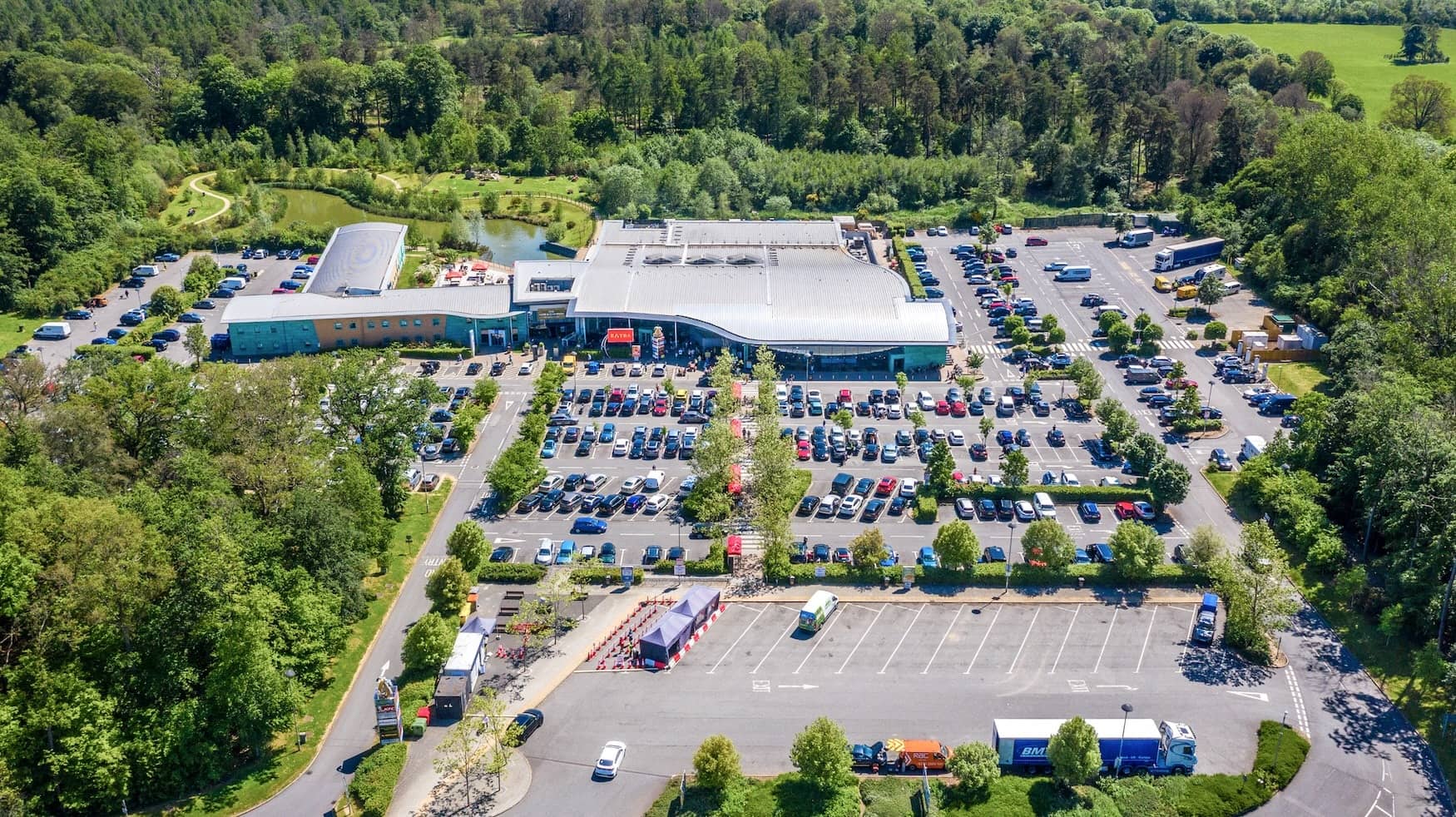
The front lines of this revolution are not within major city centres, but somewhere perhaps more unexpected: Motorway Service Areas (MSAs).
Driving change
For advertisers seeking accuracy and control, MSAs are the ideal environment – providing access to a captive audience where data collection is possible to an extent unachievable in other settings. Almost two thirds (60%) of all online spending occurs on mobile devices out of home, and £72bn is spent while people are on leisure journeys. It’s no wonder MSAs are being looked at as DOOH’s secret weapon.
Data collection is possible through Automatic Number Plate Recognition (ANPR) technology, which captures granular vehicle information from all that enter and exit. Access to live feeds that deliver such a rich level of insight are a powerful tool for businesses who know which sections of the population they want to reach.
Pairing that vehicle data with supplementary survey samples creates the possibility to build an even more detailed picture of the audience, including their characteristics, interests and buying behaviours, to unlock a portion of that £72bn.
A blueprint for change
This model is already paying dividends for advertisers. After spending the past two years developing a platform that enables advertisers to achieve certainty in audience targeting, i-media has developed a real-time, DOOH model which is improving industry benchmarks for impact and accuracy.
The platform uses ANPR data with AdTech that has been built in house. The technology overlays the ANPR data – providing a wealth of information including the make, model, and fuel type of each car – with 180,000 YouGov survey samples, giving extensive analysis of vehicle owners, and in turn, their interests, and purchasing profiles.
These insights enable marketers to create highly targeted campaigns, delivering content that resonates with an audience's specific interests and needs. The technology has already been used to sell exotic holidays to owners of luxury vehicles, which resulted in a 56% increase in purchase consideration.
Predicting intent to purchase
The next step in adtech is increasing accuracy in targeting consumer profiles using data. Algorithms are able to discern consumer behaviour and interests with more accuracy, which gives brands even greater precision in messaging. The more information you can feed an algorithm, the smarter it becomes, which is why current data and a captive audience exponentially improves the ability to reach the right people.
Recently, Skoda used i-media's Predictive Intent to Purchase (PIP) algorithm to target potential buyers of its new Octavia model, which resulted in +83% higher awareness of Skoda advertising in the past month amongst targeted drivers.
The road ahead
The precision afforded by access to real-time data makes MSAs a source of huge potential value to brands and businesses. The combination of real-time insight with real-time placement drives impact, results and a higher benchmark for the industry.
The challenge now is to build on these capabilities. We will continue to push the boundaries of real-time data and work with clients to test and learn, because their return for investment is so much higher when they can target their audience with this accuracy. Our early campaigns have delivered results far above industry benchmarks, and our PIP capability is set to become the backbone of industry-leading DOOH strategies, as moving from prediction into the definite revolutionises the impact of digital advertising.
Originally published in Performance Marketing World by Jacob Jankel, CTO at i-media:

-card.webp)