The February half-term had barely ended when the Foreign Office updated its travel advice for several destinations across the Middle East. For many British families with spring breaks already booked and deposits already paid, the timing created immediate uncertainty around travel plans.
This shift is not entirely new. Over the past few years, rising costs, changing traveller priorities and a growing preference for flexibility have already been influencing how and where people choose to travel.
This uncertainty has contributed to how British travellers are approaching their holiday plans this season - a shift that is already visible in the data.
According to VisitBritain, domestic overnight trips in the UK reached 122 million in 2023, with travellers increasingly favouring short breaks closer to home. This is supported by search and booking data from Expedia Group, which shows domestic travel increases by more than 100% during global disruptions and locations such as the Lake District, the Cotswolds, and Scotland continue to rank among the most in-demand domestic destinations.
These are not small movements. They represent millions of searches, hundreds of thousands of people actively redirecting their holiday intent toward domestic destinations. This is less a sudden shift than an acceleration of an existing trend towards domestic travel. In uncertain moments, people tend to shift towards what is predictable and safer - which, right now, is a staycation in the UK.
For travel and tourism brands watching all of this, the challenge is not finding the audience. The audience is already on the move - just in a different direction, somewhere along the UK motorway.
The families who cancelled long-haul holidays are now driving to the Lake District. The couples who had a Maldives anniversary trip fall apart are booking boutique hotels in Edinburgh. The groups who were going to split Easter across two budget airline flights to Tenerife are hiring a cottage in Wales instead. Their desire to take a break is completely intact. Their willingness to take a chance on international travel, however, right now, is not.
What this means practically is that spring 2026 is shaping up to be one of the most significant domestic tourism seasons in recent memory. This is not because the UK has suddenly become more appealing, but because the alternatives have, for now, become more complicated. And complicated, for many British families, means not worth it.
The shift is also reflected in travel sentiment data. Research from June 2025 showed that even before the February escalation, global uncertainty and cost of living pressures were already leading British travellers to change their travel plans.
.png)
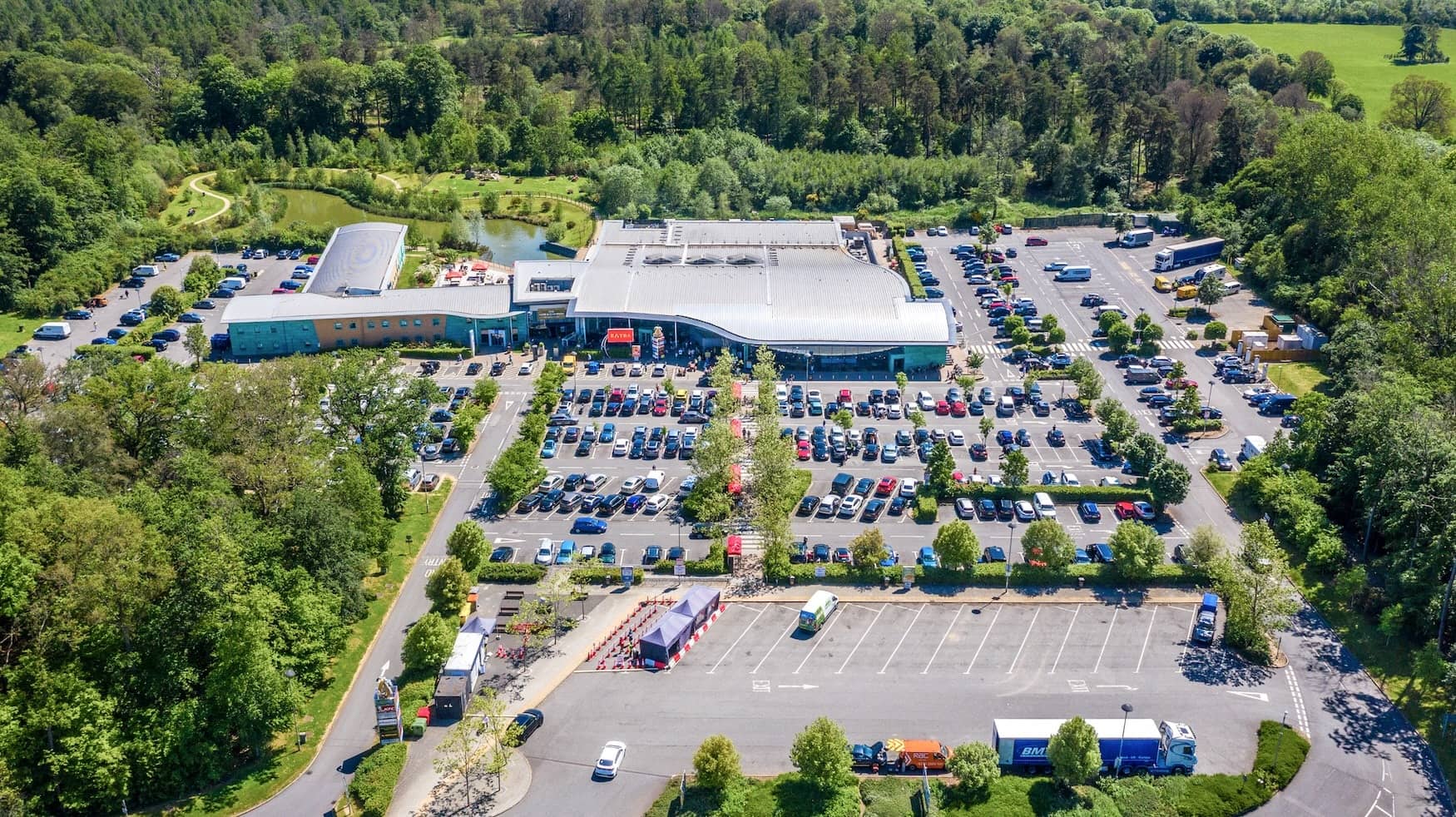
Every school holiday weekend, every bank holiday Friday, every Easter Saturday - the same audience that would have been boarding a plane is, this year, loading the car. They stop at motorway service areas. They get coffee. They let the children run. They look at their phones. They spend 22 minutes, on average, in exactly the kind of “not in a rush”, receptive frame of mind that media planners spend their careers trying to create. It is also why motorway service areas have quietly become one of the more interesting environments for brands looking to connect with travelling audiences.
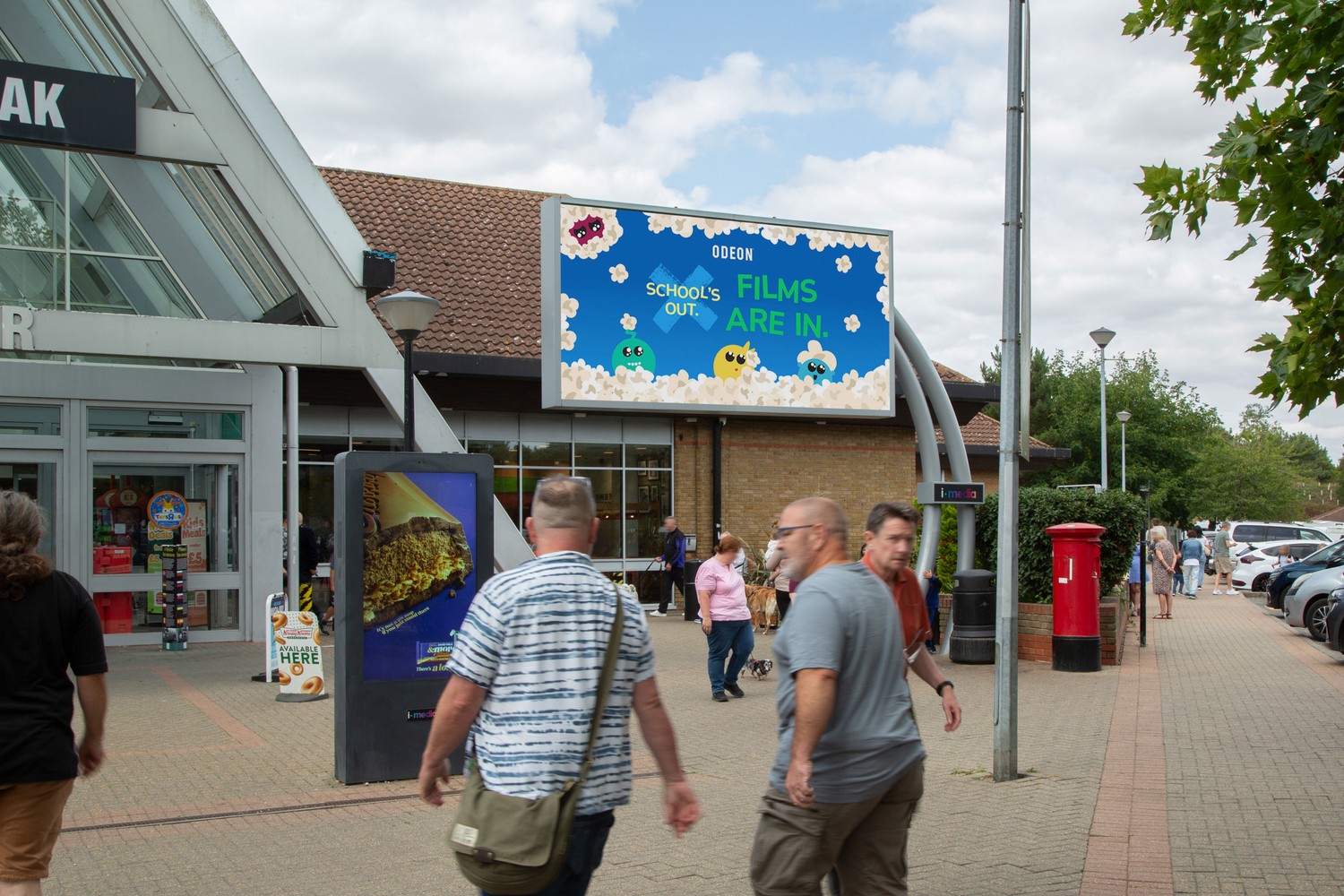
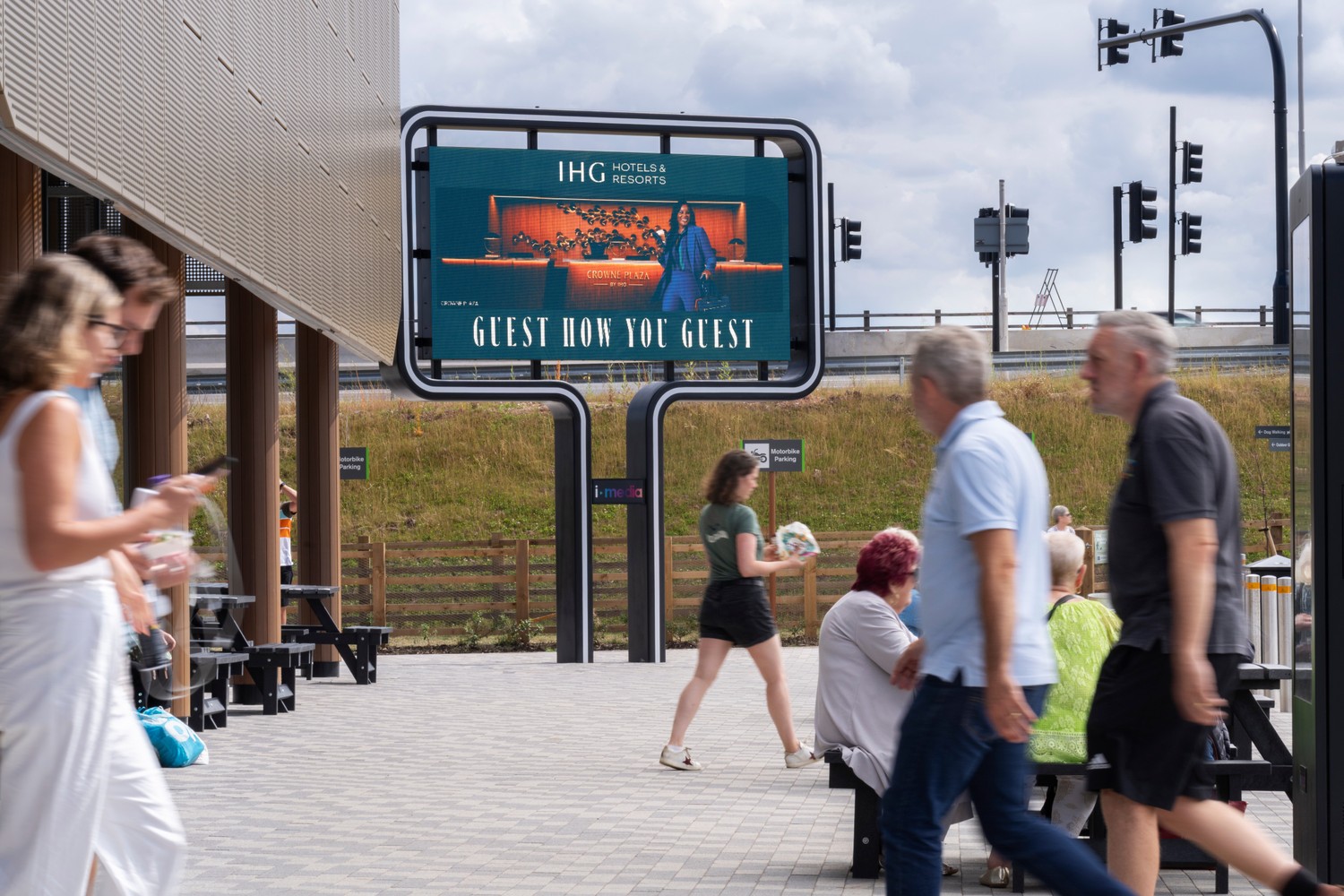
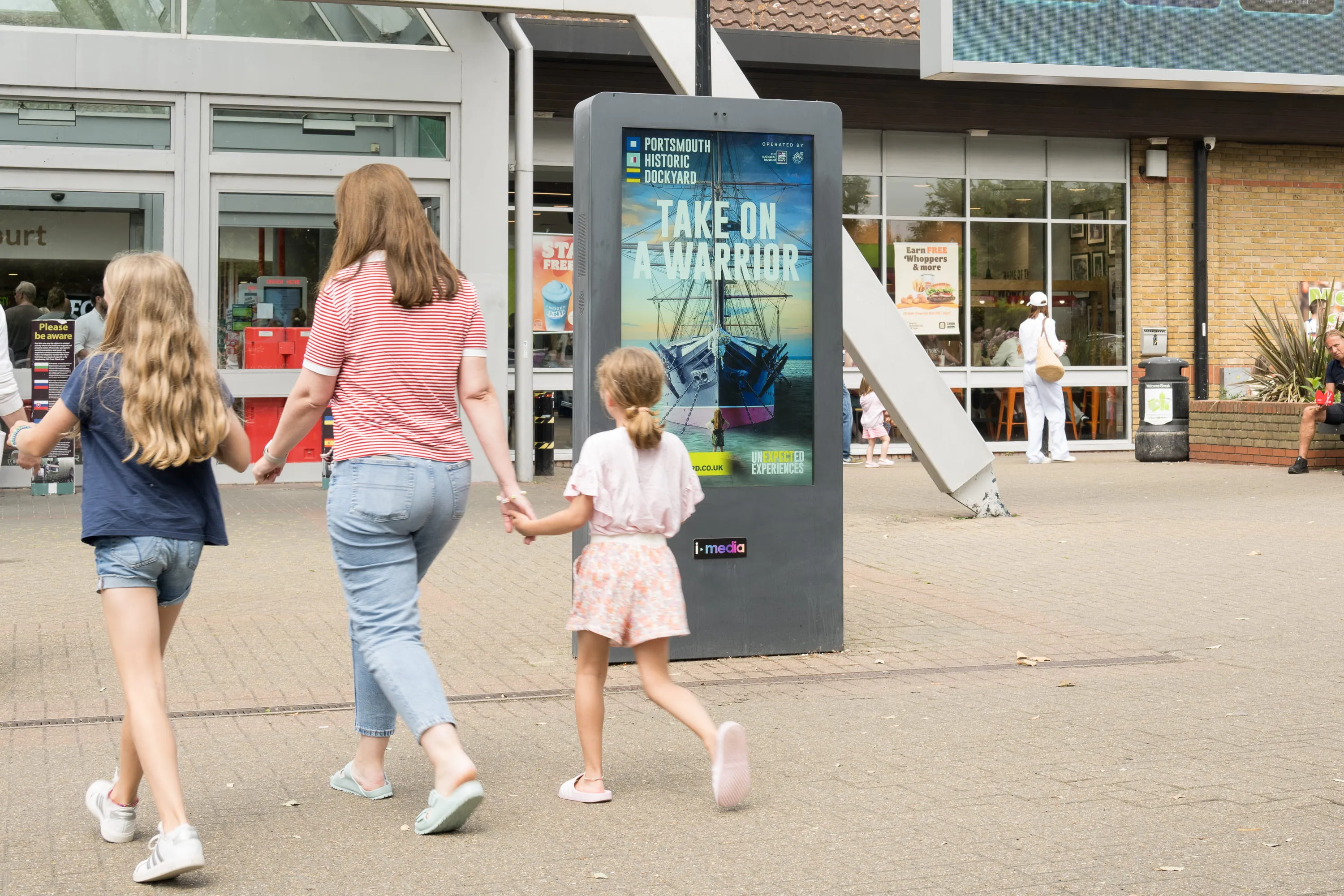
Across the UK, the i-media network reaches around 8.1 million people each week, spanning more than 130 motorway service locations and covering 98% of the motorway service estate. Digital screens appear across roadside approaches, forecourts and within retail spaces such as WHSmith, creating multiple opportunities for brands to appear naturally along the stopping journey. But what makes these environments different is not simply scale. Visitors to motorway service areas are present, purposeful and ready to spend. In fact, around £1.5 billion is spent on non-fuel purchases at UK motorway service areas every year. Those purchases happen in a moment of genuine dwell - not during a quick scroll or between tabs, but when people have stepped away from the road, taken a pause and are deciding what to do next.
For brands, the current motorway audience has a quality that is difficult to replicate elsewhere. These people have already made a decision - the decision of being there, in that moment.
They are not in consideration. They are not comparing destinations. They have booked, packed, and left the house. Reaching them at this moment - with messaging about where to stop, what to do when they arrive, where to eat, what to book for tomorrow - is not awareness advertising. It is influence at the point of travel, when decisions about accommodation upgrades, attraction tickets, and dining bookings are still live. This is where motorway media becomes uniquely powerful.
The creative brief for travel brands this Easter should be to inspire the next stop along the journey. The brands that do this well - that lean into the joy of discovering what is already here rather than consoling people for what they have missed - will find an audience that is unusually receptive to persuasion.
Lake District and VisitScotland tourism campaigns have increasingly focused on rediscovery rather than replacement, encouraging travellers to choose nearby landscapes and experiences deliberately rather than seeing them as substitutes for somewhere else.
The longer picture is worth considering too. Consumer confidence in international travel, once shaken, is slow to rebuild. Previous regional disruptions have shown that short-term volatility is followed by recovery - but recovery takes months, not weeks. Some of the families doing UK staycations this Easter will discover that Devon in April is genuinely lovely, that the Northumberland coast deserves more credit than it gets, that Scotland in spring is worth a second look. Some of them will come back next year. This is your brand's audience, right here, somewhere along the motorway.
The question for the brands is whether their advertising strategy can move as quickly as their audience has. Because the audience is already travelling. Spring travel plans are being made now - not when the next campaign cycle begins. And the motorway is where you will find them. It always was. Brands that show up in these moments have an opportunity to influence where people stop, where they stay and how they spend along the way.

%20-%20Copy.webp)