


September is home to one of the year's key movement moments. It marks the beginning of the school year and with it, the exodus of hundreds of thousands of students travelling across the country. Nearly 70% of students leave their hometown to go to university. That means more cars on the road, higher footfall at our sites, and crucially, an influx of a specific audience brands can cater towards.
18-25 year olds, or ‘Gen Z’, power significant sectors of the economy. In 2025, they drove over £26bn of retail spending. By 2030, their share of the industry is projected to be around 40%. They are a key audience at our sites, and their routine spending habits, notably around retail, entertainment and FMCG, make them easy targets for relevant campaigns.
Over 600,000 new students start university in the UK each September. Combine that number with the existing pool, and you get over 2 million undergraduates starting back at Uni each September. It’s a rare few weeks where an entire generation, and the parents driving them, are simultaneously on the move.
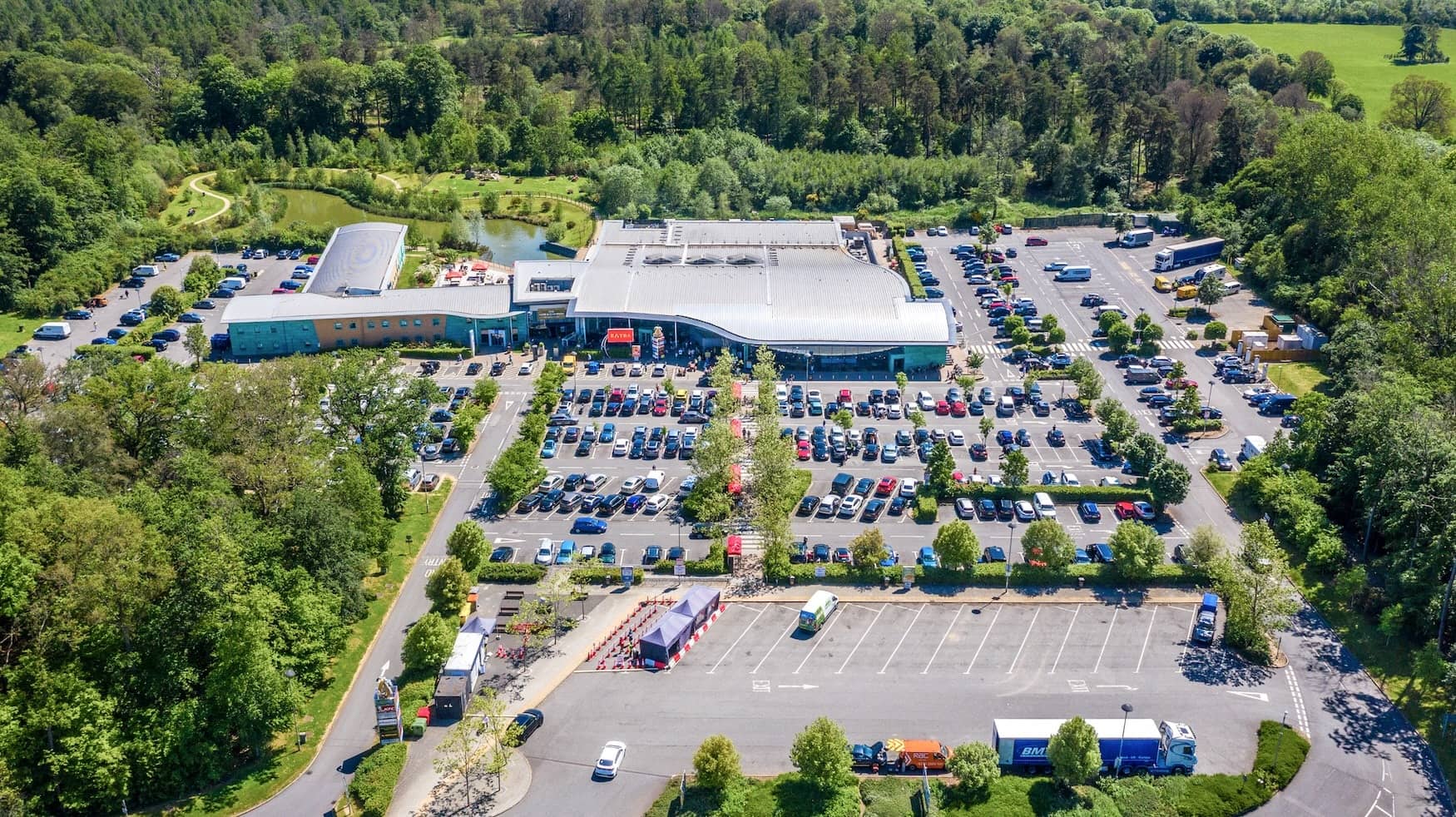
Advertising campaigns positioned at motorway service areas are perfectly primed to target this audience. 70% of students will leave their birth city for university, travelling an average of 89 miles to get there. Given that the typical journey time prompting an MSA stop off is 90 minutes, it is reasonable to expect a large proportion of these to stop at MSAs on their way to university. What's more, our sites are high-dwell environments where visitors have time on their hands. With visitors spending an average of 22 minutes at an MSA, they have time to pause and absorb one of our 1,000+ full motion digital screens, static 6-sheet or washroom panels.
Last year, our ANPR cameras captured an increase of around 5% in vehicles across the country during university drop-off weekends, equating to over 12 million vehicles recorded at our sites across the period. i-media’s proprietary data platform has access to a huge bank of data points thanks to ANPR technology at our sites. We see exactly how many cars are entering and leaving our sites in real time, and by matching it to other data sources such as YouGov, we can make strong inferences about our audience make-up.
From this, we know that our sites are home to an audience ripe for September targeting. An independent survey found that 18% of MSA parents expected to drive their kids to university in 2025. Our data supports this trend, and we expect a similar pattern this September.
We also know that the increase is not spread evenly across the month of September. University travel can be pinpointed to a couple of specific weekends. The typical travel weekends for university students is the week before term starts, in time for Freshers’ week. For 2026, that means the weekends of the 12th/13th and 19th/20th are likely to be the peak dates for university travel, as most terms start on the 21st or 28th of September.
Term-start week has always meant a spike in motorway traffic. What ANPR data adds is precision: the ability to see, almost to the hour, when that spike happens and who’s in the car. For brands with a September message, the back-to-uni window isn’t a broad seasonal moment to plan around loosely; it’s a small number of identifiable days when a generation of new students, and the parents driving them there, are captive on the road. The advertisers who move first on that data will reach them before term even starts.
Sources: UCAS, More school leavers living at home for university and college study; Barclays, Karen Johnson on Gen Z spending (November 2024); HESA (Higher Education Statistics Agency), SB273 – Higher Education Student Statistics (27 January 2026); Oxford Business College / FE News, New study reveals how far UK students travel for university (analysis of 2023 HESA data), November 2024
