


.JPG)
Powered by proprietary ANPR technology and first-party data intelligence, i-media sits at the forefront of a medium that is rapidly closing the gap on digital. When the IAB sat down with us to discuss the state of DOOH (from programmatic adoption and retail media to measurement barriers and beyond) our answers weren't just for the interview. They're the backbone of how we talk about what we do. Here's everything we said.
How has the overall DOOH landscape changed recently and what are the most significant trends in your opinion?
DOOH has undergone a fundamental shift in the past two years, moving from a reach-led, broadcast medium to one where audience intelligence, measurement, and data-driven creative are the primary drivers of growth and investment.
The most significant structural change is the maturation of programmatic DOOH. Buying by screen loop or fixed format is increasingly being replaced by audience-triggered activation, where campaigns serve only when verified target audiences are present. This mirrors the precision that advertisers have come to expect from digital, but in premium, high-attention environments free from ad fraud and brand safety concerns.
A further development, and one that marks a genuine first for the medium, is the ability to correlate ad placement directly with sales data. For the first time, DOOH operators with access to on-site EPOS systems can analyse the relationship between screen exposure and transaction behaviour in the same environment, establishing a credible ROAS story for OOH that has previously been impossible to tell. For both sales houses and brand advertisers, this closes a loop that digital has long held as a structural advantage. That gap is now closing.
What drives advertisers to launch DOOH ad campaigns?
The primary driver is the combination of scale and contextual precision that DOOH uniquely offers. Unlike digital, DOOH delivers brand-safe, viewable, fraud-free impressions at a reach level that few other channels can match. Unlike traditional OOH, modern DOOH increasingly offers the audience intelligence that performance-led advertisers require.
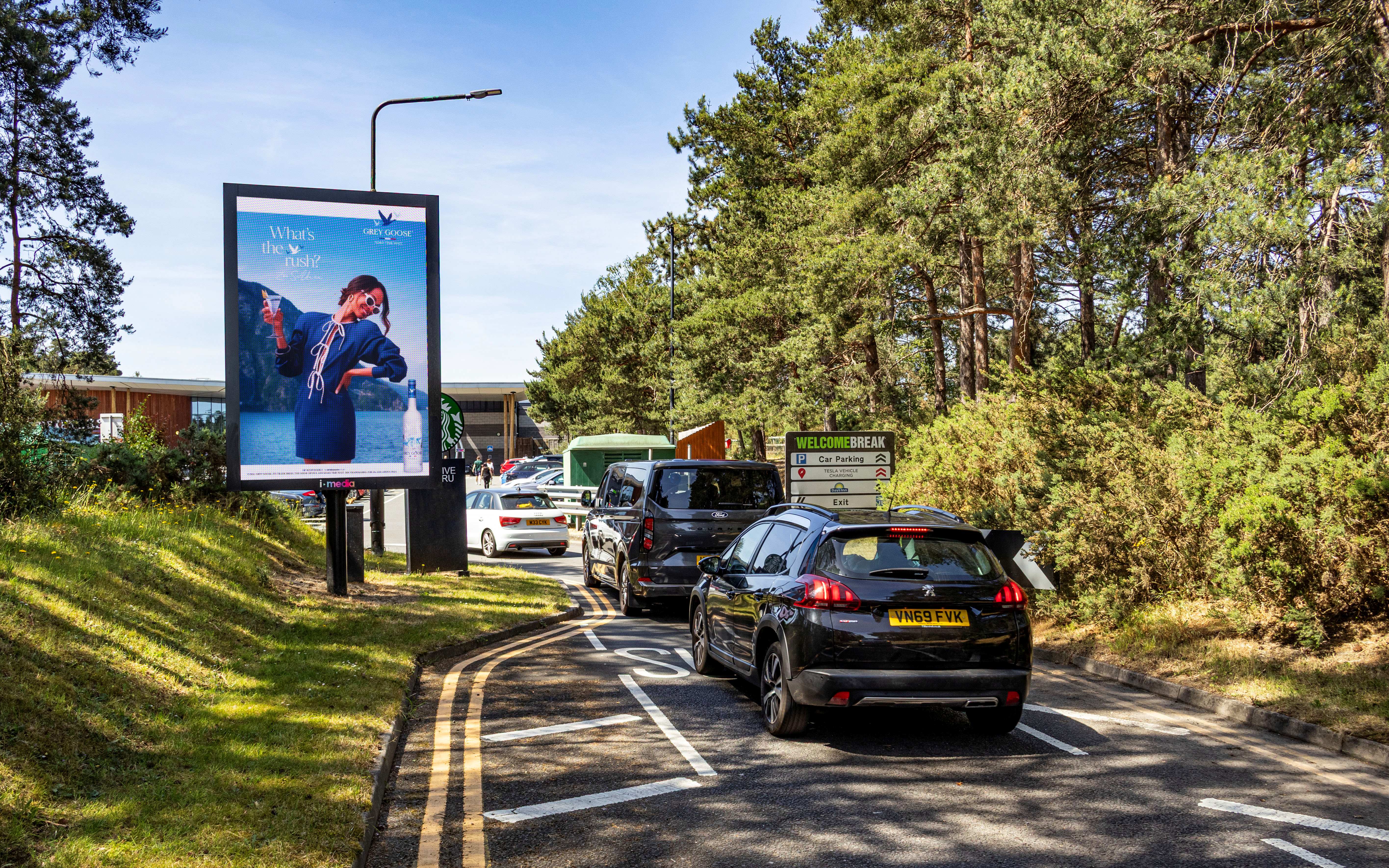
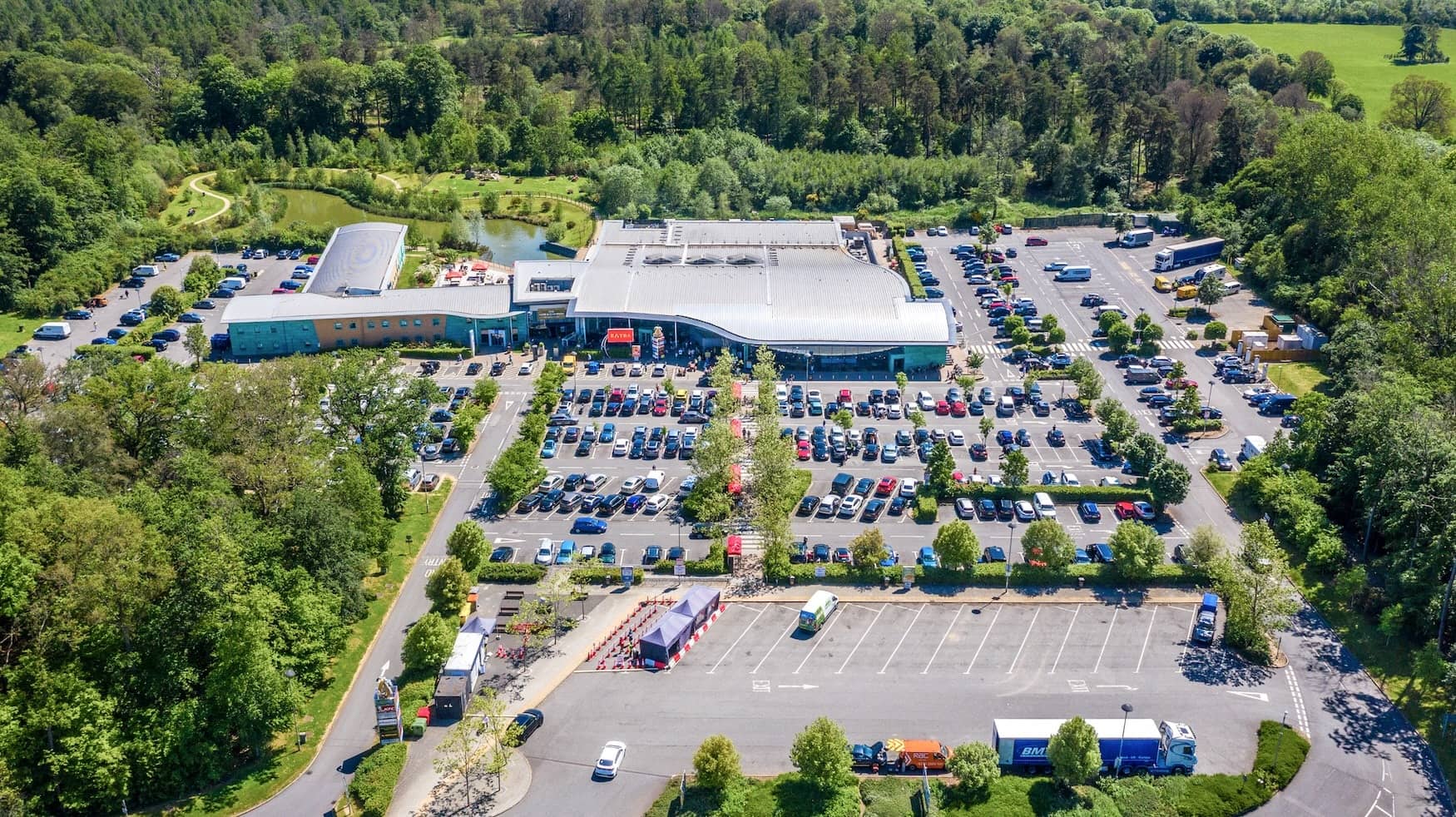
Our discussions with clients often focus on capturing audiences in high-dwell settings where people are receptive to advertising. There is growing recognition that a positive context and where an ad appears matters just as match who sees it – take Motorway Service Areas – up to 8.1 million people a week attend the services with 94% of customers satisfied. That mood is a huge advantage to brands.
What are the main barriers to advertisers using DOOH?
The persistent perception that DOOH cannot be measured to the same standard as digital remains the most significant barrier – this is a space where i-media continues to innovate to target and trigger campaigns to minimise waste.
But the measurement problem runs deeper than technology. The industry's current measurement infrastructure was built for a different era. These frameworks were designed to serve a broadly static, panel-estimated OOH market, and they are not keeping pace with what modern DOOH can actually do. The result is that the planning and accountability standards applied to OOH are a decade behind the product itself.
This matters commercially. OOH's share of advertising spend has remained broadly stable for years, but it should be growing. DOOH is the only medium where digitisation has genuinely improved the product for advertisers – more precision, more accountability, more creative relevance, no fraud, no ad-blocking, no brand safety compromise. Every other major platform is now, in one form or another, a pay-to-avoid-ads model. Furthermore, it’s one of the only media formats with a growing audience. Subscription tiers on streaming, ad-free options across social, and most recently TikTok's move in this direction all reflect an implicit acknowledgement that advertising is increasingly something audiences tolerate rather than engage with. AI-generated content and algorithmically optimised feeds are accelerating this, eroding the trust and attention that make advertising effective for brand builders. DOOH has none of those structural problems.
The gap between what DOOH offers and the share of budgets it commands is, in large part, a measurement and advocacy problem. Until industry bodies invest in accountability frameworks that reflect the deterministic, real-time capabilities of modern DOOH rather than the estimated, panel-based outputs of 2005, budget allocation will continue to underrepresent the medium relative to its actual value.
What are your 2026 DOOH growth rate expectations?
WARC is forecasting +3% growth in OOH versus 2025, which is consistent with what we’re hearing from our agency partners. The underlying conditions for DOOH growth remain strongly positive in 2026 – investment in ad-tech to improve trigger and targeting, screen infrastructure, the acceleration of programmatic and retail media, and the increasing integration of DOOH into digital media plans signal growth.
In 2024, DOOH accounted for 67.4% of total OOH spend and will grow at a CAGR of 7.6%, while traditional OOH will inch forward only 0.7%.
For i-media specifically, growth is being driven by increased demand for our deterministic ANPR and data intelligence capabilities from both direct clients and programmatic buyers, the expansion of our network toward 3,500 digital screens by 2027 and the scaling of EV charging infrastructure which brings a high-dwell, high-value audience segment. We are also seeing growth in sectors that have historically underinvested in OOH, particularly B2B, financial services, and automotive aftersales.
What share of DOOH do you anticipate PrDOOH to reach by 2028?
The rate of adoption is accelerating as DSP and SSP integrations mature and as advertisers demand the same audience-led flexibility from OOH that they apply to other digital channels.
Our expectation is that programmatic will account for a double-digit chunk of DOOH spend by 2028. For i-media, programmatic represents the opportunity to make our ANPR audience signals available at scale across major DSPs, enabling buyers to plan and activate against verified profiles in real-time.
What are the future growth drivers in DOOH advertising?
The next phase of DOOH growth will be shaped by access to and activation of data-led systems that improve audience intelligence and creative production and delivery.
For i-media, the move from modelled to verified audience data is the most significant structural shift in DOOH advertising. We are using proprietary first-party data from a composite of sources (whether from ANPR, loyalty programmes, or EPOS systems) to target, trigger and guide the effectiveness of DOOH.
We’re using our EV hub, Roadside and Retail Media products to extend the effectiveness of our client campaigns, connecting upper funnel brand exposure to lower funnel purchase behaviour.
At a macro level, as Ai creative production tools improve, more of our clients will be able to commission data-triggered campaigns that respond to contextual and environmental conditions, driving further performance for DOOH.
How does programmatic fit into your future plans?
Programmatic is central to our growth strategy: our focus is on making the i-media intelligence layer available programmatically, so that buyers can plan and activate against verified audiences rather than just buying screen time digitally.
We also see programmatic as a route to efficiency for our clients. Audience-triggered campaigns, which serve only when a relevant audience is detected in proximity, minimise wasted spend and improve message relevance without requiring manual optimisation.
What impact has the Less healthy food and drink ban (LHF) had on DOOH?
Clients are distinguishing between compliant and non-compliant OOH environments at a screen level. At i-media, all of our MSA environments and over 60% of our roadside screens fall outside the HFSS restrictions. We have not seen a reduction in FMCG investment as a result of the changes.
We encourage any shift toward contextual and audience-based planning in DOOH, as brands invest more carefully in understanding which environments genuinely serve their target audiences.
How widespread is the current use immersive technologies such as AR/VR in DOOH, and how do you expect use of these technologies to develop by 2028?
Immersive technologies continue to be constrained by their inability to offer scale. Our Data-triggered dynamic creative and experiential products can adapt messaging in real-time, offering a depth of engagement, and relevance.
