


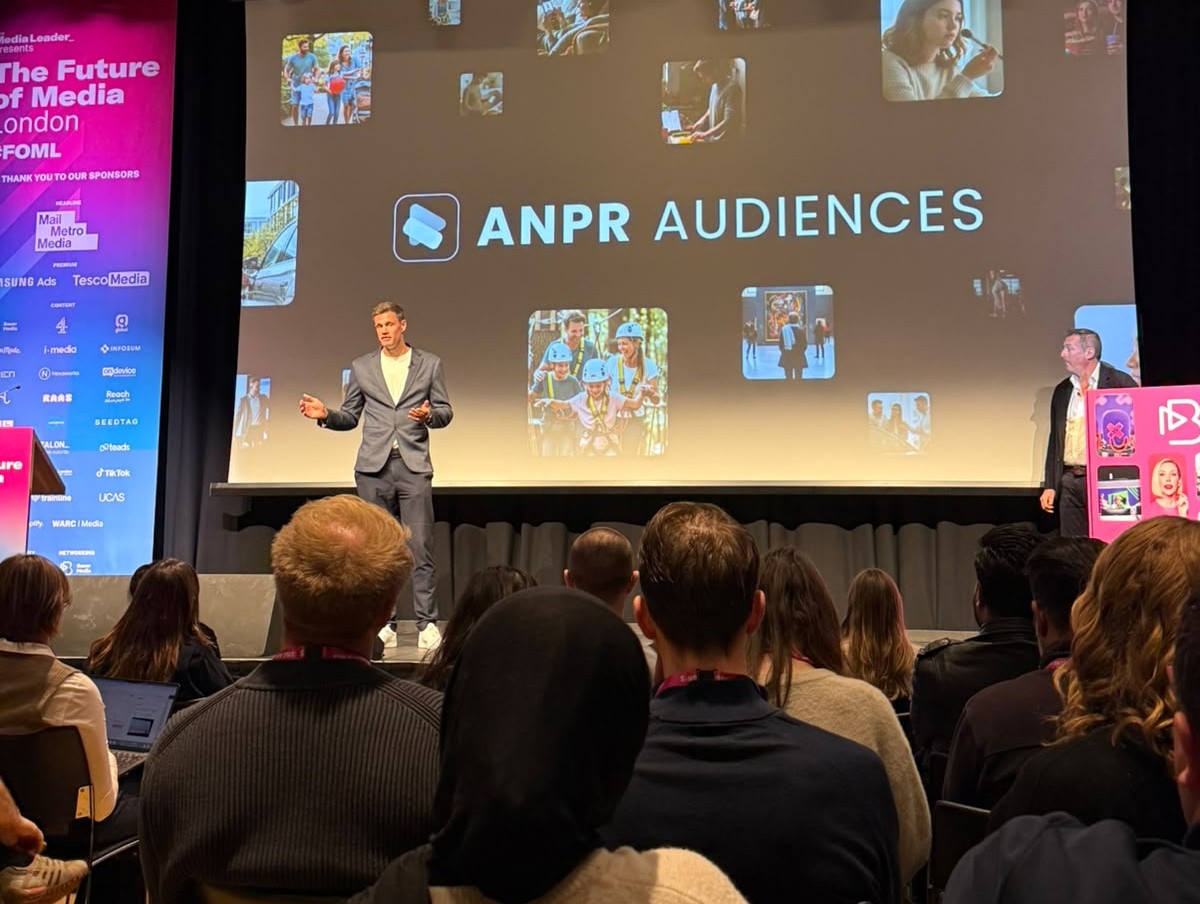
Speaking at Future of Media London today, i-media's Chief Revenue Officer Sam Tester and Chief Growth Officer Nick Slaymaker made the case that out-of-home has quietly closed a gap most of the industry hasn't noticed: it has stopped modelling where an audience might be and started knowing where it already is.
Their session, "Reading the Road: Creating and Delivering Audiences Against Behaviour in Real-Time," opened with the numbers that frame OOH's position in UK media. The IPA's 2026 Commercial Media Time Study puts out-of-home at just 5% of total media spend, yet credits it with 24% of commercial media time, a share on par with social media and ahead of both commercial TV and the open internet. For Tester, that gap is the channel's opportunity rather than its problem: OOH can't be skipped, blocked or switched off, and it is trusted in a way few other formats are. What it has lacked, until recently, is precision.
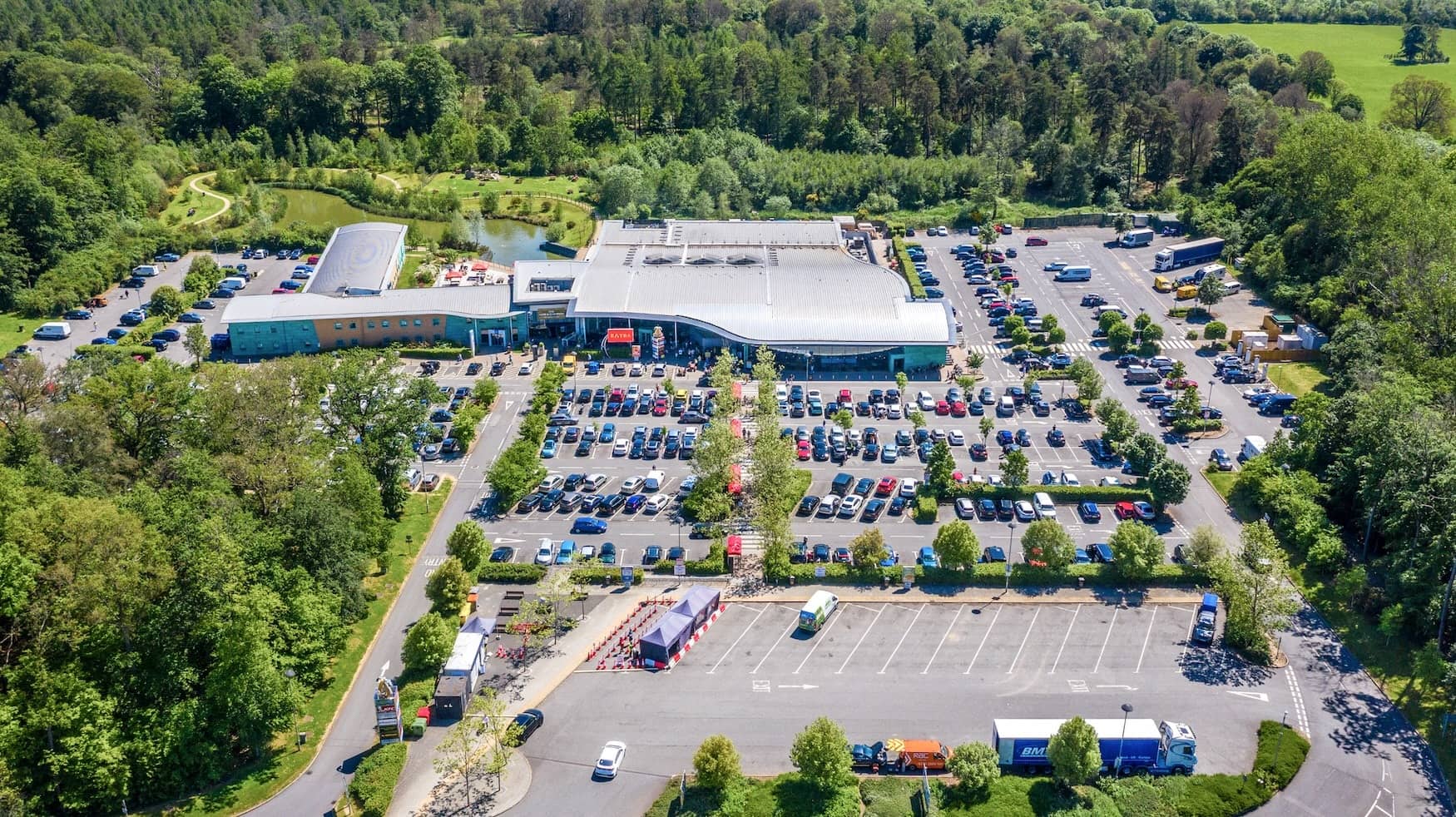
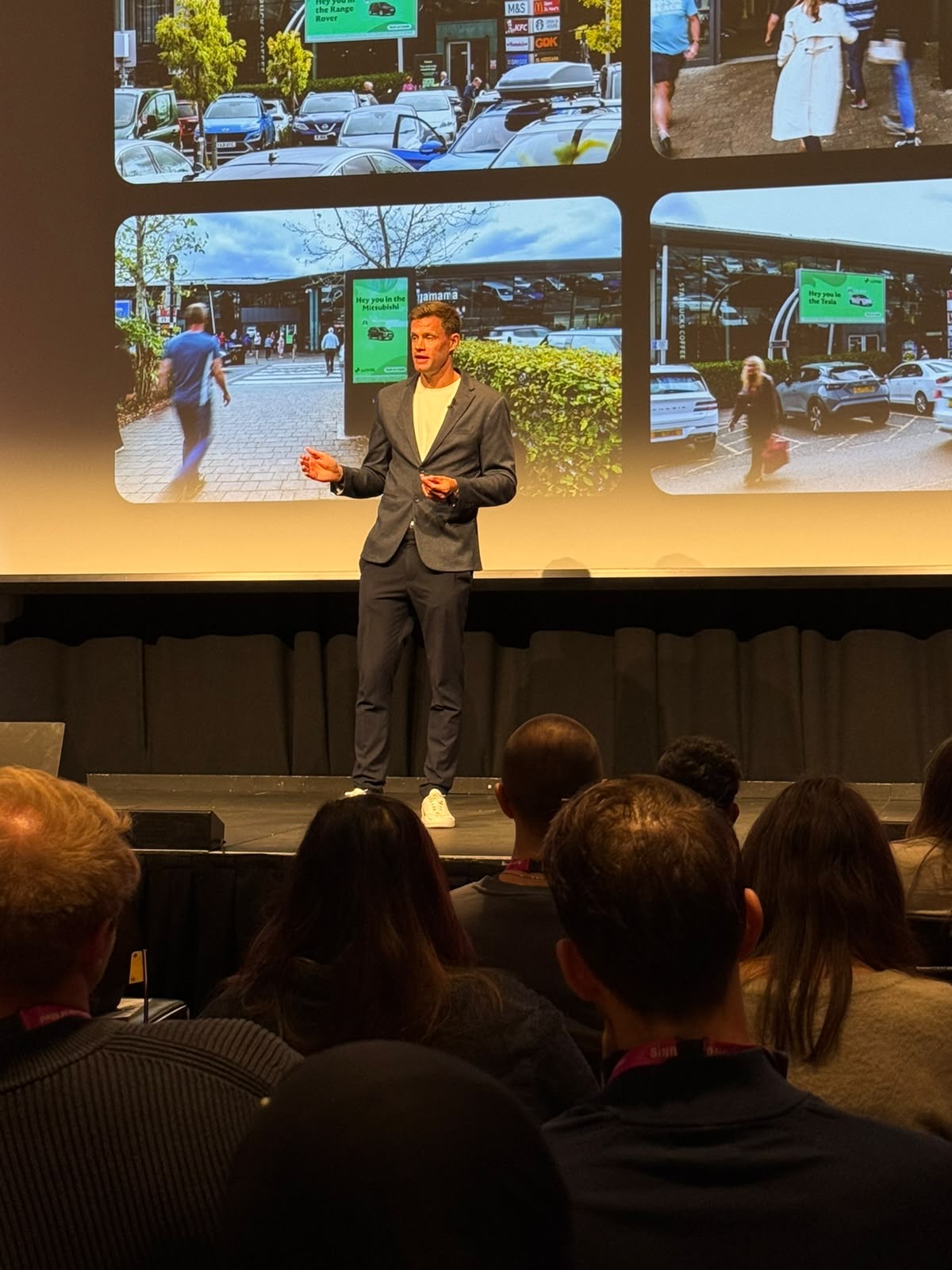
i-media has spent the past three years closing that gap. ANPR camera technology, first deployed at Motorway Service Areas in August 2023, reads every vehicle entering a site and resolves it against fifty data points: make, model, age, fuel type, value, even MOT due date. In its first week live, the system logged 6.8 million people and 4.2 million vehicles, more than 10% of all registered vehicles in the UK, passing through i-media's network. That volume, Slaymaker explained, now generates 200 million data points a week.
The harder problem was reach beyond automotive. Vehicle data alone tells a precise story about a car, but not about the person driving it or what they might buy next. i-media's answer, set out on stage as ANPR Audiences, layers two further signals on top of the vehicle read: postcode sector geography, granular enough for meaningful targeting while staying GDPR-safe, and a partnership with Starcount, which brings open banking, mobile movement and lifestyle behaviour into the picture. The result, Slaymaker said, is three connected layers: the vehicle, the location, and the audience, turning millions of weekly journeys into a privacy-safe behavioural signal rather than a demographic guess.
The London data point used to illustrate this drew an audible reaction from the room. Tester opened with the assumption most planners make, that Londoners don't leave London, before showing it to be wrong: more than one million Londoners visit an i-media site every week, equivalent to 7% of the capital's population, and 70% of those visits happen midweek, with Friday the single busiest day. For a planner running a London campaign, that is over a million people sitting entirely outside their media plan, reachable at a fraction of the cost of a city centre buy.
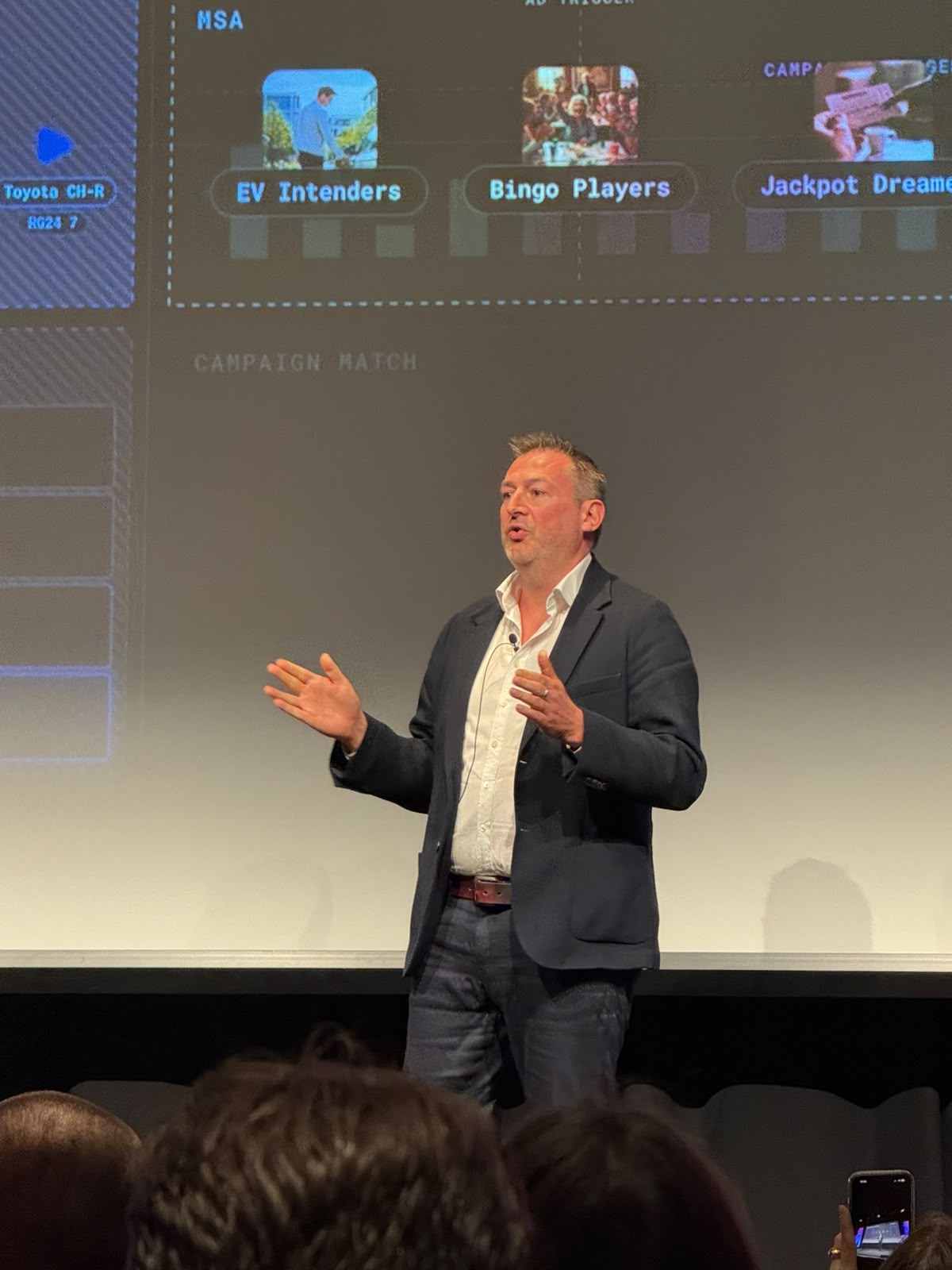
Four ways of cutting that audience followed: by vehicle, by geography, by demographic profile and by behaviour, with the last unlocked specifically by the Starcount layer. Tester pointed to Lloyds Bank's My Car campaign, running with Publicis Groupe, as the clearest proof point so far. Targeting the bank's own customers by vehicle and banking data lifted trust by 11%, doubled ad recall, and increased recommendation intent by 15%, alongside brand and ad awareness scores well above i-media's network averages.
The session closed on what Tester called a simple shift for planners to absorb. OOH has moved from selling sites and predicting audiences to identifying who is physically present and triggering a message the moment they arrive. Reach that brands currently miss, precision without losing the one-to-many scale that makes out-of-home work, and targeting that happens in real time rather than after the fact. For a channel used to proving its reach, the harder and more interesting claim on stage today was precision.
About Future of Media London
Future of Media London returns to Kings Place on 3 and 4 November, now in its sixth year and curated by The Media Leader under this year's theme, Media Means Business. The event brings together more than 1,000 senior media leaders, planners, buyers, strategists and decision-makers from across agencies, brands, media owners, broadcasters, adtech and platforms, with over 100 speakers appearing across multiple stages. This year's programme is shaped by an inaugural advisory board of 25 senior industry figures drawn from agencies, broadcasters, publishers, platforms and brands, including Imogen Fox, global chief advertising officer at The Guardian, giving i-media's session a stage among some of the most senior voices in UK media.
