
OUR INVENTORY
Out of Home
Retail media advertising is the practice of placing brand messaging inside or around the retail environment itself, on screens, shelves, and other touchpoints shoppers encounter while they're actively browsing or buying. Retail media meets buyers at the point of decision, when intent is highest and the path to purchase is shortest.
For i-media, that retail environment is the UK's motorway service area (MSA) network: convenience stores, food courts, and forecourts visited by millions of motorists every week. It's retail media built for a mobile, purchase-primed audience.
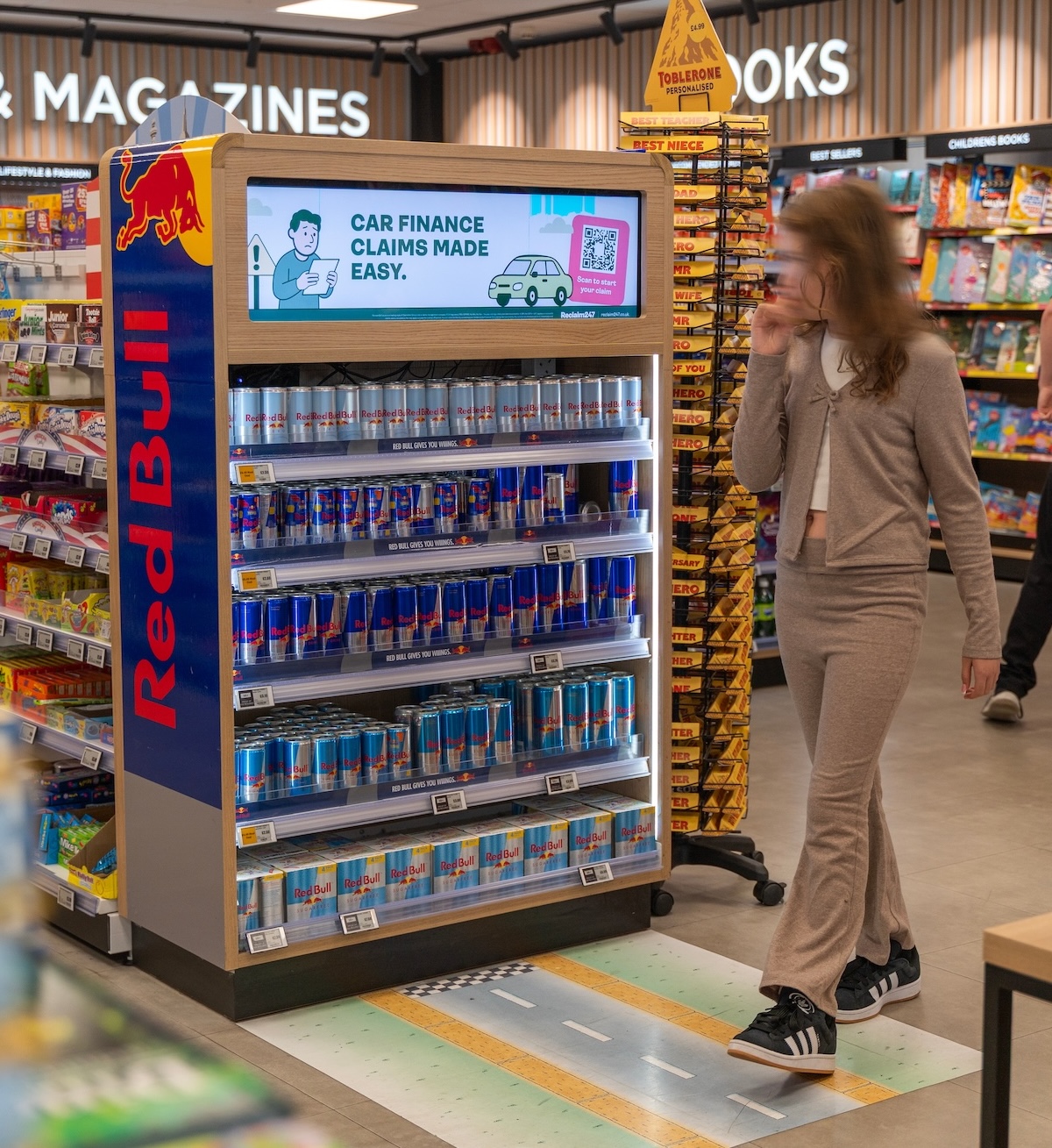
High-intent audiences. Retail media reaches shoppers who are already primed to buy, who are browsing, comparing, and making active purchasing decisions in the moment.
Efficiency at scale. A single piece of retail media creative can run across an entire network simultaneously, or be tailored by site, time of day, or audience, all managed centrally rather than coordinating multiple print runs and installations.
Measurable performance. Because retail media runs in a defined, trackable environment, it's easier to tie exposure back to footfall, dwell time, and downstream sales impact than with less contained forms of advertising.
i-media has access to a national audience of spenders. Service stations are high-dwell environments where users are in receptive, purchasing mindsets. Plus, our Electronic Point of Sale (EPOS) data backs up spending habits and campaign performance.
i-media regularly receives EPOS data from our landlord partners. By analysing consumer purchasing behaviour, we know the best times and locations to push creative. It also means we can show change in sales pre, during and post your campaign, proving its effectiveness in real, verifiable terms.
Motorway service areas receive over £1.5bn of non-fuel spending, with 82% of visitors buying a snack. We have access to an audience ready and eager to spend.
Enhance your campaign by combining retail media with our other formats: from large format digital billboards to static washroom panels, we have advertising space suitable for every opportunity.
Because every format is screen-based, creative can be updated, scheduled, or swapped remotely, letting messaging respond to time of day or seasonal moments without a physical site visit.
Advanced ANPR Targeting
i-media's retail media network is built around contextual integration. Screens are placed exactly where shoppers make decisions.
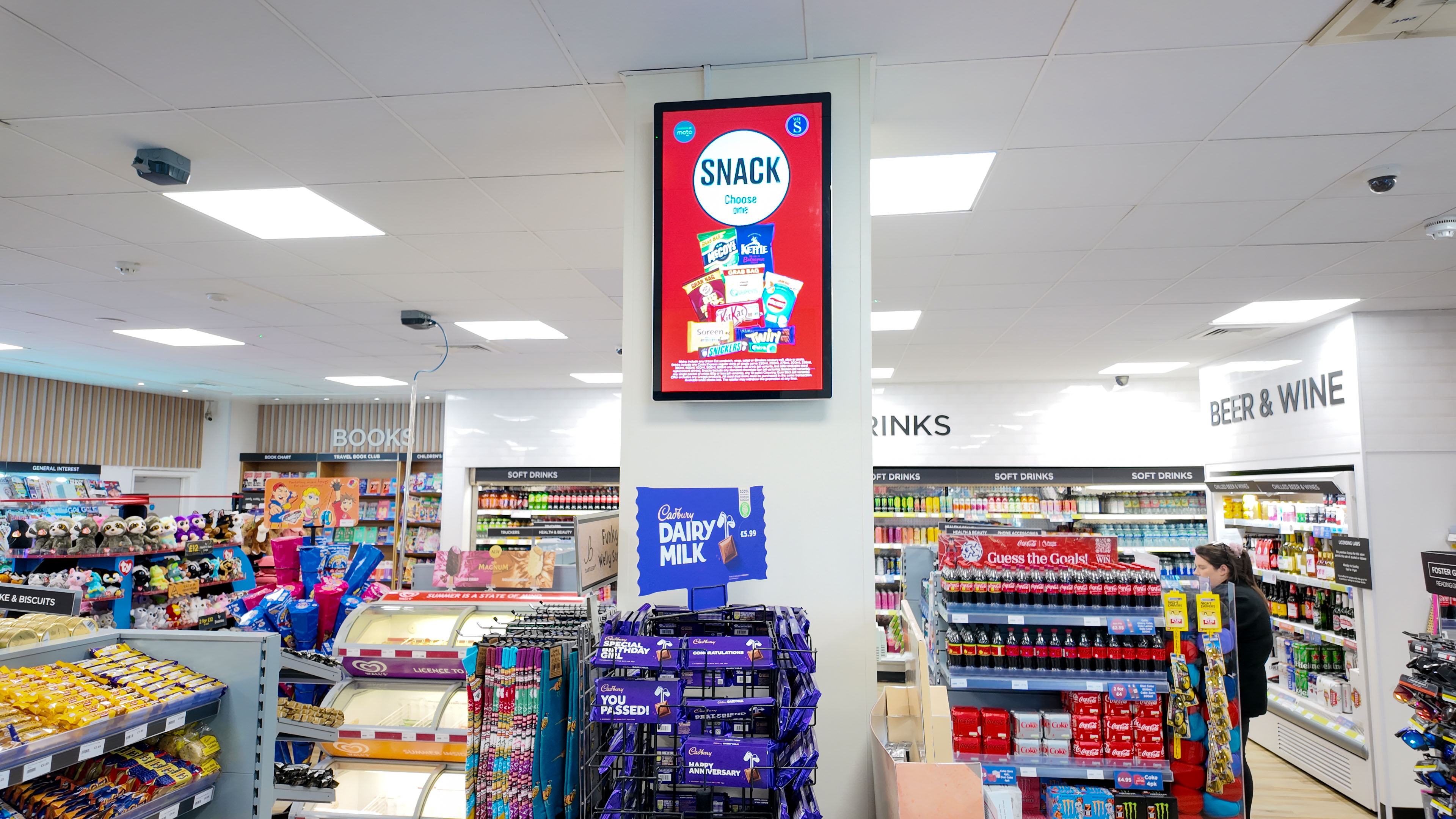

Our retail media services are deployed inside the retail environments at the heart of the UK's motorway service areas, currently anchored by our WHSmith network, reaching an average of 6.8 million weekly visitors across in-store D4 screens and shelf gondolas.
These sites sit within MSAs that, between them, drive an estimated £1.5bn in annual non-fuel spend, placing brands right at the transaction, not on the approach to it.
As our retail media network expands, deployment is extending across further convenience and forecourt retail spaces on the Strategic Road Network (SRN) (motorways and major A-roads) that carries the bulk of the UK's long-distance driving traffic.
Retail media advertising cost varies depening on a number of factors, including location, utilisation of ad-tech, format type, and campaign length and flight. For more information on how our advertising costs are calculated, see the guide below.
INVENTORY
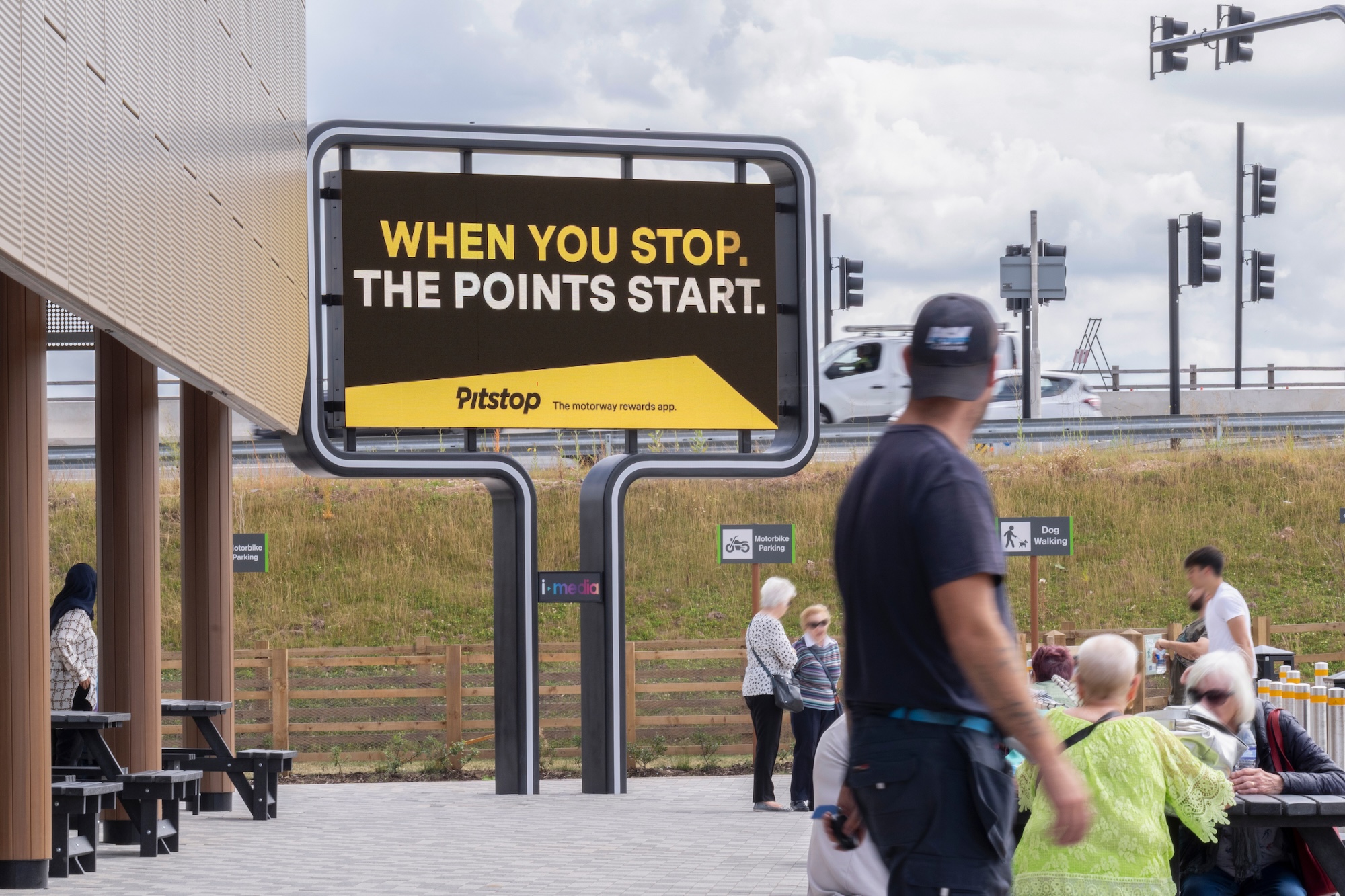
Discover the entire range of our screen inventory - from large format D48s to internal D6s, EV screens and more.
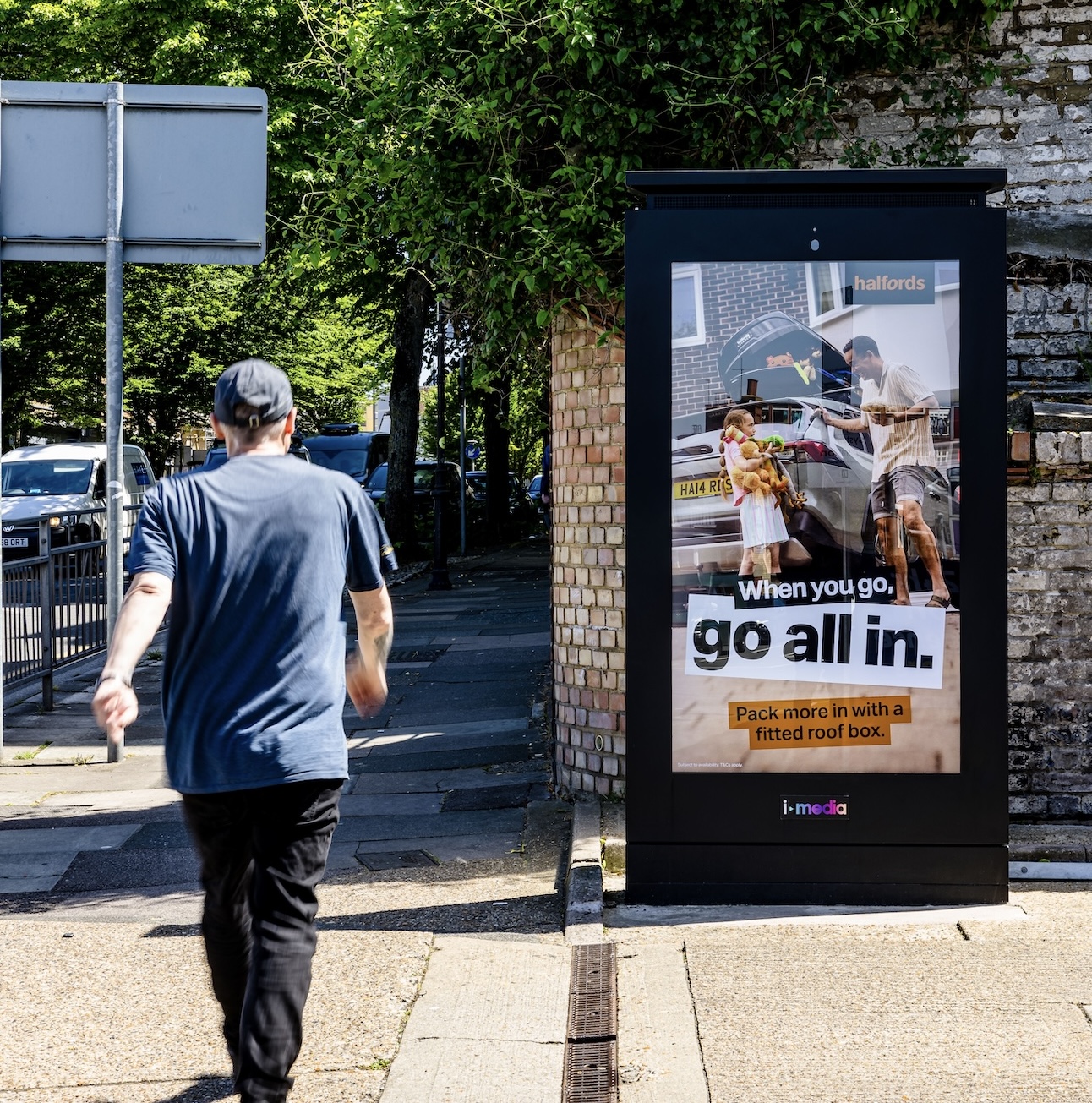

Yes. i-media's retail media network reaches motorists across a broad range of categories. It works well for brands outside FMCG and grocery, including automotive, travel, finance, and leisure, wherever the goal is reaching a high-intent audience mid-journey.
You do need to source your own creative. Our in-house team is happy to help with formatting changes. For a full breakdown of specifications, see here.
Yes. Our retail media screens are fully digital, so creative can be updated, scheduled, or swapped remotely so messaging can reflect live product availability, stock levels, or promotions as a campaign runs.
Rather than relying on estimated footfall, i-media works with EPOS data supplied by our landlord partners. Visibility into actual purchasing behaviour lets us identify the strongest times and locations to run creative, and, just as importantly, lets us report back on campaign performance in real terms, not modelled estimates.
Find out how we can intelligently reach your audience. Tell us who you'd like to reach.
Responsive web design is an approach that ensures your website looks good on all devices, from desktops to smartphones. It involves using flexible layouts, images, and CSS media queries.
Enhancing your website's SEO involves several strategies that can help you rank higher in search engine results. Here are some effective methods:
Search Engine Optimization (SEO) is the practice of enhancing your website to improve its visibility on search engines like Google. The goal is to attract more organic traffic to your site.
Selecting the right Content Management System (CMS) is crucial for the success of your website. Here are some factors to consider:
By considering these factors, you can make an informed decision that aligns with your goals.
A Content Management System (CMS) is a software application that enables users to create, manage, and modify content on a website without the need for specialized technical knowledge. It provides a user-friendly interface that simplifies the process of content creation and management.
Key Features of a CMS:
In summary, a CMS is essential for anyone looking to maintain a dynamic online presence.